
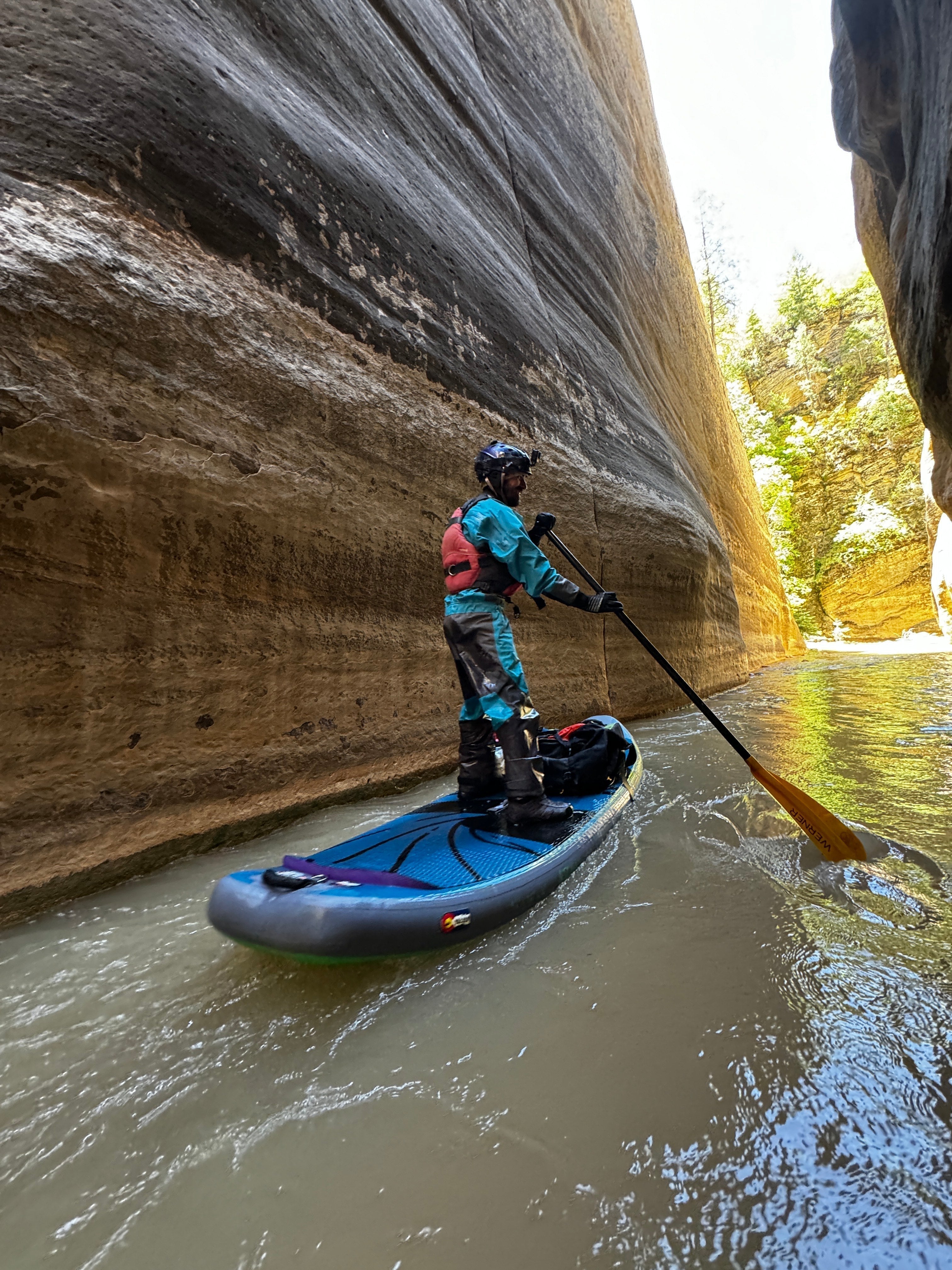
SUP Safety: The Complete Guide to Paddleboarding Safely
SUP is an accessible, rewarding sport — and like any water activity, it rewards paddlers who understand the risks and prepare for them. Whether you're on a calm lake or a class III river, the safety decisions you make before you launch determine how the day goes. This guide covers everything that matters.
PFDs: Wear One. Every Time.
A personal flotation device (PFD) is required by the U.S. Coast Guard for all stand-up paddleboarders paddling beyond the surf zone or in navigable waters. On rivers, it's the law — and on any body of water, it's simply the right call.
Choosing a PFD for SUP
- Flatwater and ocean: A Coast Guard-approved Type III vest or a low-profile SUP-specific belt pack. Belt packs are popular for warm-weather flatwater paddling — they stay out of the way and inflate on demand. They do not work if you are unconscious.
- Rivers and whitewater: A fully foam-filled Type III whitewater vest is the only appropriate choice. Belt packs and inflatable PFDs are not suitable for whitewater. You need guaranteed flotation the moment you hit the water, with no inflation step required.
Fit matters as much as type. A PFD that rides up over your chin in the water isn't protecting you. Buckle and adjust so it's snug but not restrictive, and tug upward on the shoulders — it should stay in place.
Leash Selection: River vs. Flatwater
Your leash choice is one of the most consequential safety decisions you'll make. The wrong leash in the wrong environment can turn a manageable swim into a serious entrapment hazard.


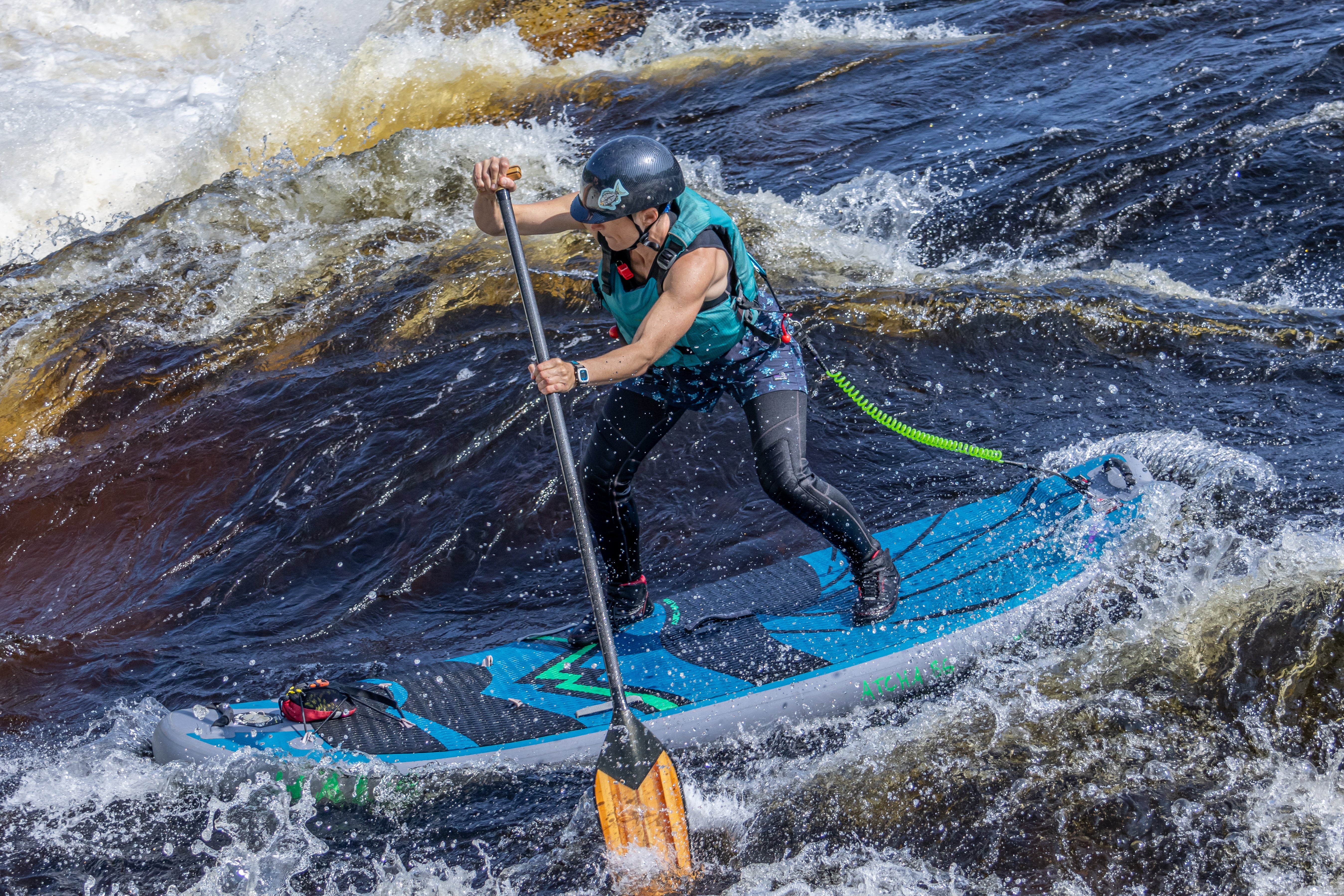
Never use an ankle leash on a river. If you fall and your board gets caught in a hydraulic or strainer, an ankle leash can pin you underwater. A quick-release waist leash lets you ditch the board and swim free in a single pull. This is not a preference — it's a safety standard across all whitewater disciplines.
Helmets: When to Wear One
On flatwater, helmets are optional. On rivers:
- Class II: Recommended, especially for less experienced paddlers or rocky stretches.
- Class III: Essential. Rocks, shallow water, and unexpected swims make head protection non-negotiable.
- Class IV+: Mandatory. A properly fitted kayak or whitewater helmet — not a bike helmet — designed for water immersion.
A whitewater helmet should fit snugly without moving when you shake your head, cover your temples and the back of your skull, and be rated for water activities.
Reading River Hazards
You don't need to be an expert kayaker to paddle rivers safely — but you do need to understand a few fundamental hazards before you put on.
Strainers
A strainer is any obstacle that lets water pass through but catches solid objects — think a downed tree, a log jam, or rocks with gaps between them. Current pushes you into a strainer with significant force. Avoid them at all costs. If you're swimming toward one, roll onto your back and push off with your feet aggressively.
Hydraulics (Holes)
A hydraulic forms where water drops over a ledge and recirculates back upstream. The foam pile on the downstream side can trap swimmers and equipment. Small holes are playful features for advanced paddlers; large ones are serious hazards. Learn to read the difference before running them.
Undercut Rocks
An undercut rock has an overhang below the waterline that current pushes toward. Swimmers can be pinned against an undercut with no way to surface. Scout from shore and never approach an undercut from the water.
Low-Head Dams
Low-head dams create a uniform recirculating hydraulic across their entire width. They are among the most dangerous features in river paddling — the current recirculates continuously with no safe exit point. Portage around any dam, always.
How to Fall and Self-Rescue
Falling is part of river SUP. How you fall and what you do after matters as much as staying on the board.
How to Fall
- Fall away from your board, not onto it.
- Protect your head — cover it with your arms if you're near rocks.
- Land flat, not feet-first, to avoid foot entrapment in shallow water.
Swimming a Rapid
- Roll onto your back, feet downstream, toes up.
- Use your feet to push off rocks and steer with your arms.
- Do not stand up in fast current until the water is clearly shallow and calm — foot entrapment is a real hazard in moving water.
- Swim aggressively toward an eddy (calm water behind an obstacle) to stop your downstream momentum.
Recovering Your Board
Your board is your biggest flotation device. In calm water after a rapid, grab it before anything else. On a river, release your quick-release leash only when your board would create an entrapment risk — otherwise, keeping it attached means you're never separated from your flotation.
Before You Launch: Trip Planning
- Tell someone. Share your put-in and take-out locations and your expected return time with someone not on the trip.
- Check flows. River levels change daily with snowmelt, rain, and dam releases. Check USGS gauge data for your section before every trip. A run that's moderate at 500 CFS can be dangerous at 2,000 CFS.
- Know the section. Scout unfamiliar rapids from shore. Walk or portage anything you're not confident running. There is no shame in a portage — it's part of good river judgment.
- Go with others. Solo river SUP significantly increases your risk. Paddle with at least one other person, especially on moving water or unfamiliar sections.
Ready to Get on the Water Safely?
Start with the right gear — a board built for where you're paddling, and a leash matched to your conditions.
Shop River Leash → Find Your Board →



Laisser un commentaire
Ce site est protégé par hCaptcha, et la Politique de confidentialité et les Conditions de service de hCaptcha s’appliquent.