
The Best River Paddle Boards: A Guide for Every Skill Level
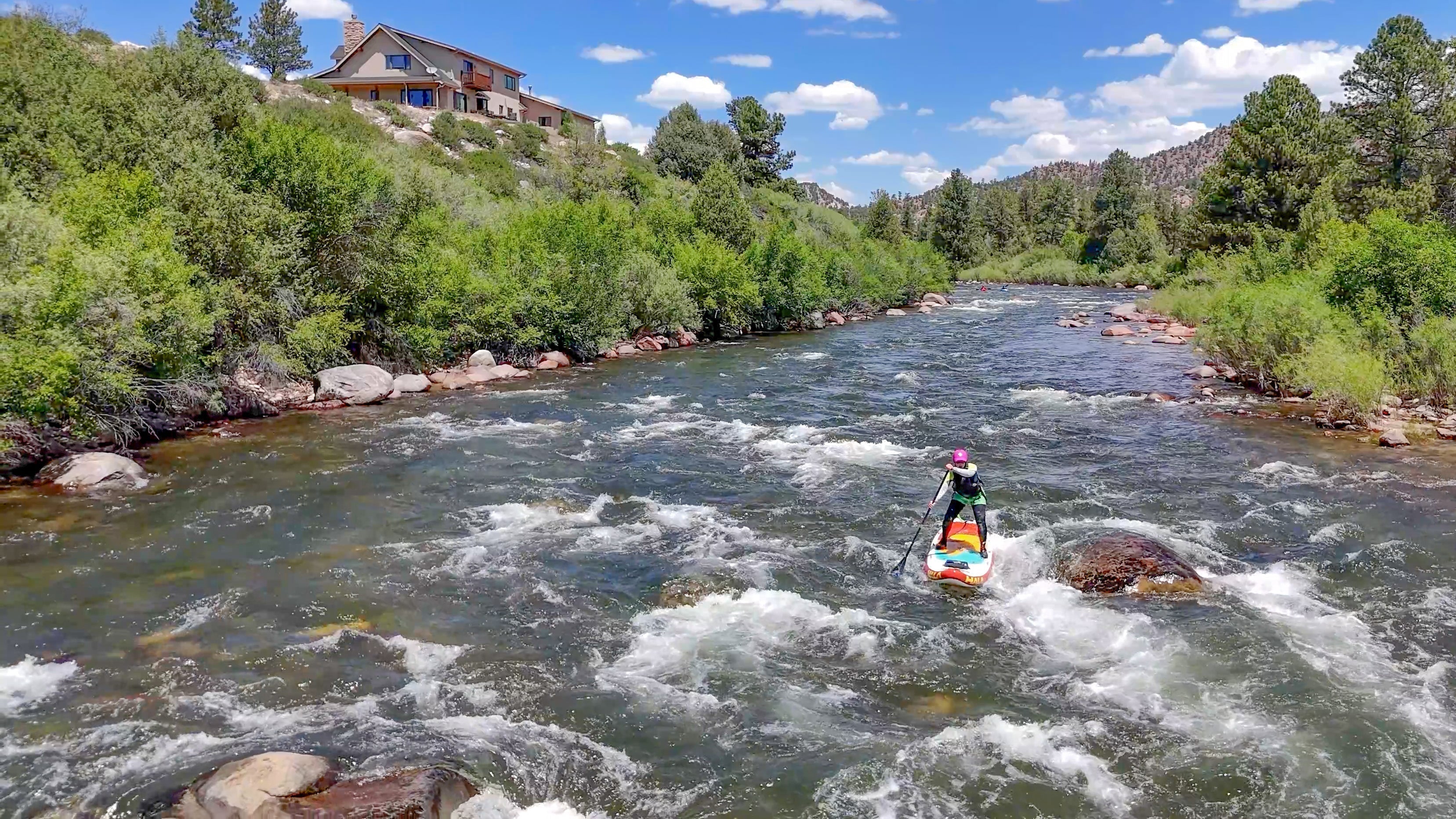
Not every paddle board belongs on a river. The ones that do share a specific set of characteristics — retractable or protected fins, substantial width for stability in moving water, and construction that can take a hit without failing. This guide breaks down the best river SUPs for every skill level, from first-time river paddlers to expert whitewater athletes.
What We Look for in a River SUP
Before getting to specific boards, here's the framework we use when evaluating a board for river performance:
- Fin system: A retractable fin system — specifically one that deploys and retracts quickly without tools — is the gold standard for rivers. It's the difference between a board that can move freely through shallow, rocky water and one that constantly hangs up and drags.
- Width and volume: River features require stability you don't need on flatwater. Boards that are too narrow make river paddling unnecessarily difficult, especially in turbulent water.
- Length: Shorter is more maneuverable. Dedicated whitewater boards run 8–10 feet. All-around crossover boards typically land around 10 feet. The longer you go, the less responsive the board is in fast, technical water.
- Construction: Fusion drop-stitch with glued-and-welded rails. Anything less will show its limits quickly on a real river.
Best for New River Paddlers: Hoss

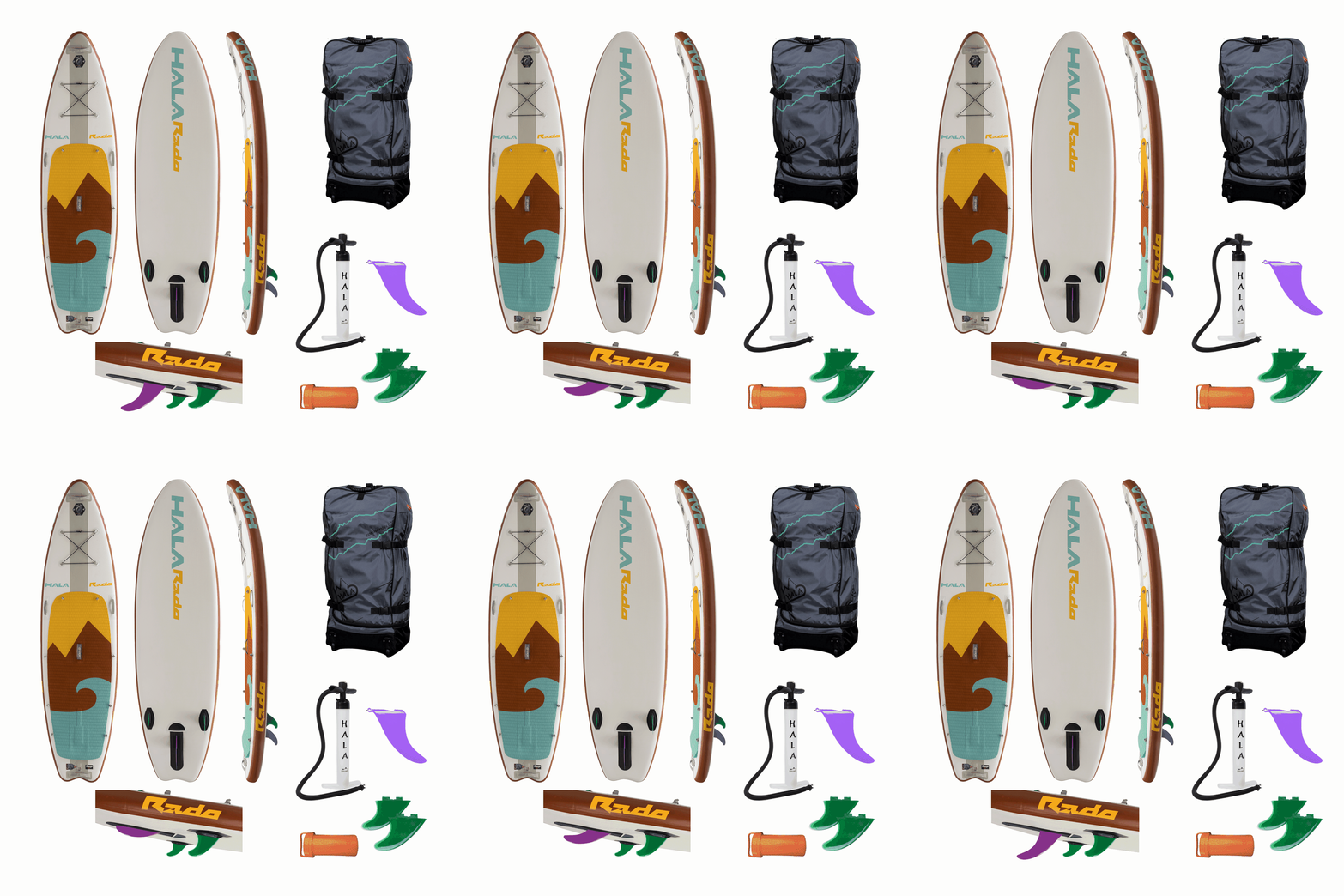
Best All-Around River Board: Rado

Best Whitewater Entry: Atcha 96

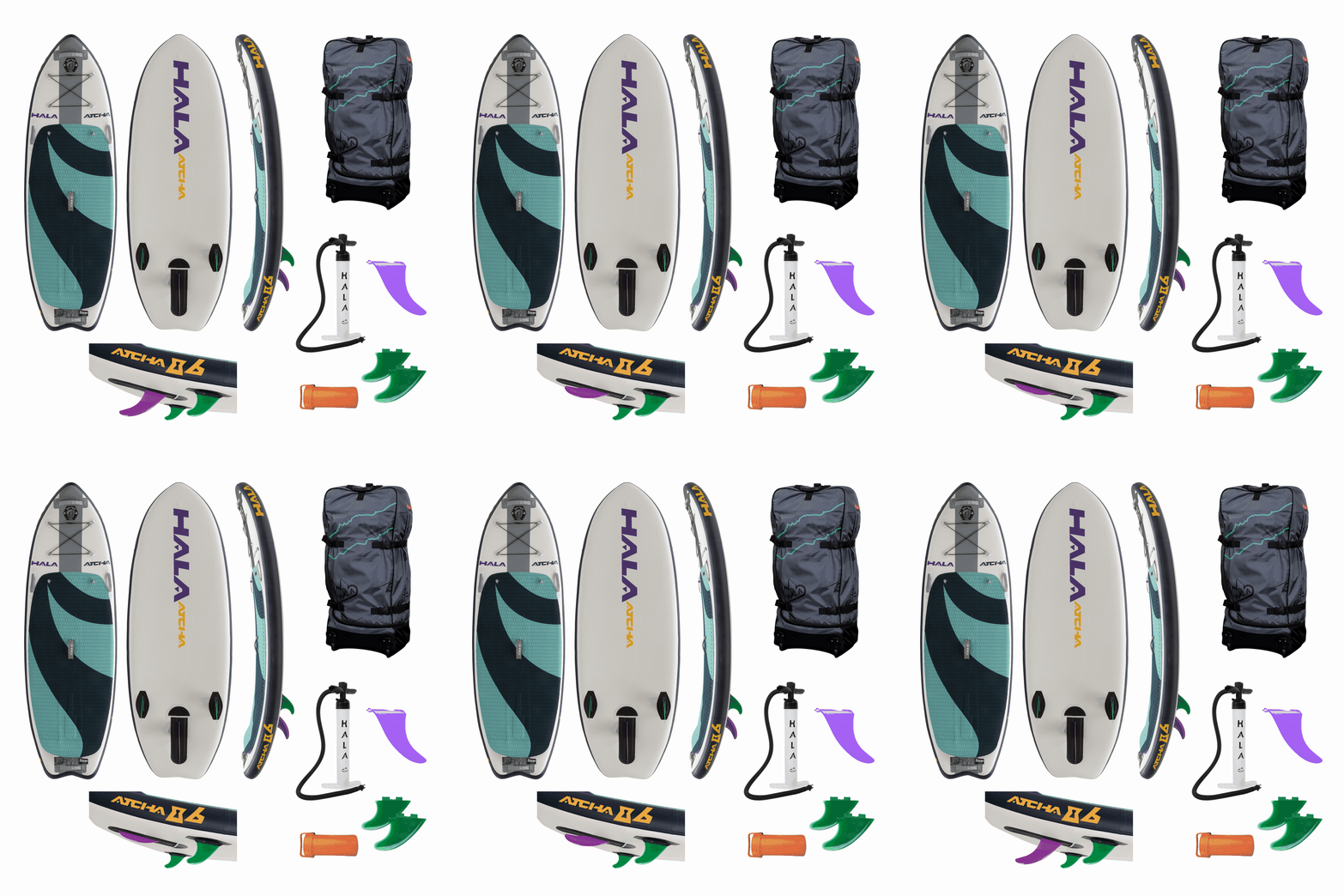
Best Performance Whitewater: Atcha 86

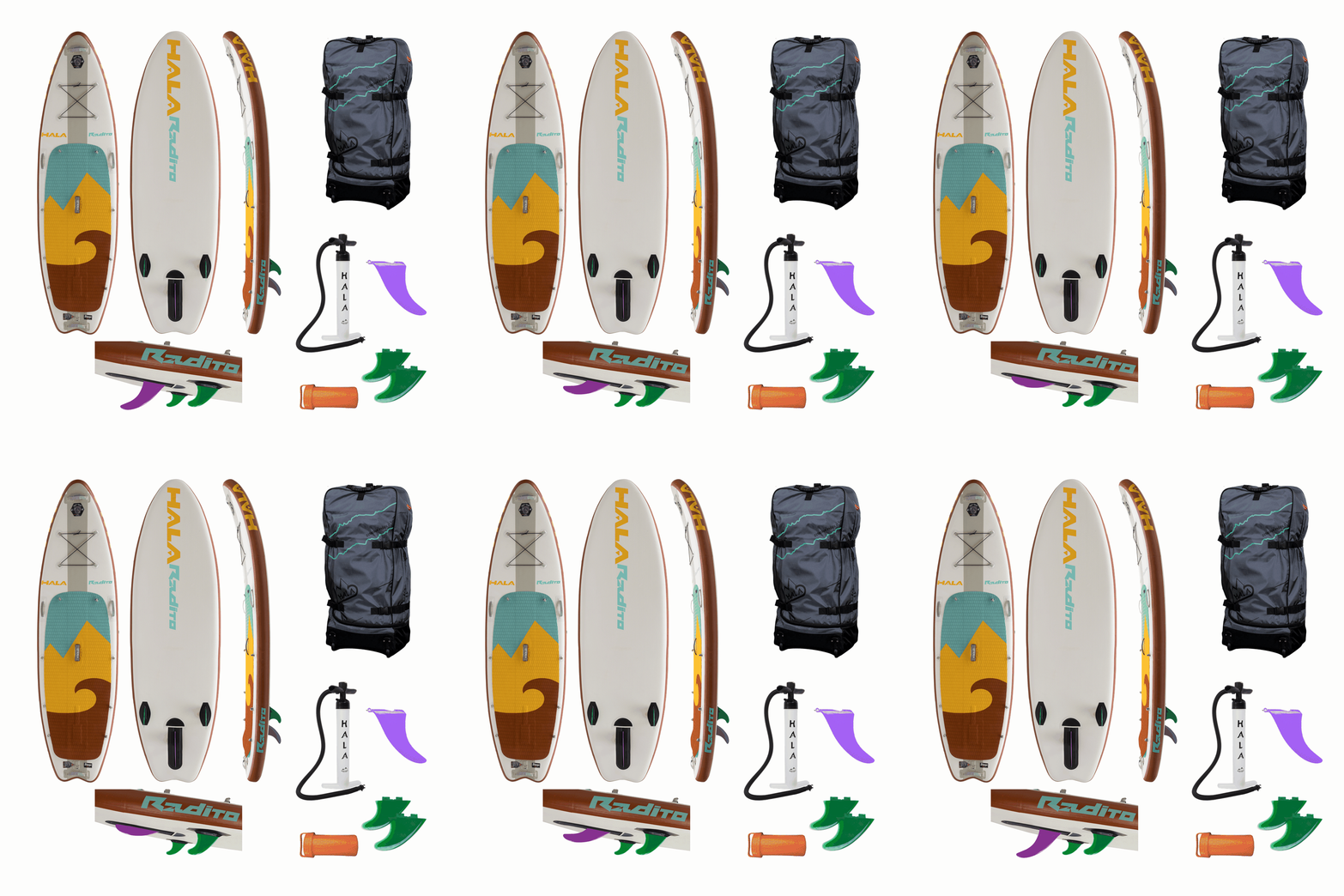
Best for Playboating: Radito

River Board Comparison
| Board | Dimensions | Fin System | Best River Class | Price | Best For |
|---|---|---|---|---|---|
| Hoss | 10'10" x 35" x 6" | Standard US box | Class I-II | $999 | Beginners, max stability, fishing, families |
| Rado | 10'10" x 35" x 6" | StompBox 2.5 + ClickFin | Class I-III | $1,399 | All-water do-it-all, fishing, expedition |
| Atcha 96 | 9'6" x 36" x 6" | StompBox 2.5 + ClickFin | Class II-IV | $1,399 | Dedicated WW/surf entry, intermediate+ |
| Atcha 86 | 8'6" x 34" x 6" | StompBox 2.5 + ClickFin | Class II-IV | $1,399 | Performance whitewater + river surfing |
| Radito | 10' x 34" x 6" | StompBox 2.5 + ClickFin | Class I-III+ | $1,399 | Playboating, technical lines |
Not sure where you fall? The Rado is the most popular board in the lineup for a reason — it covers the full range of conditions without asking you to commit to a single discipline. If you're building river skills and want a board that grows with you, start there.
Don't Forget the River Essentials
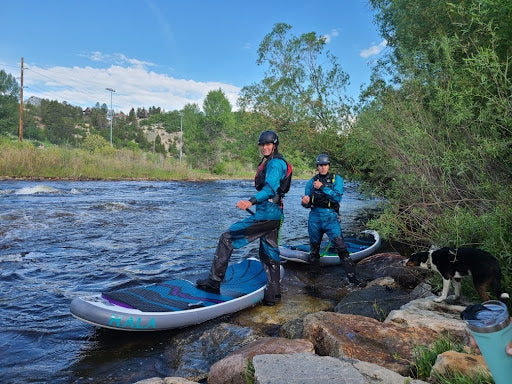
A great board is only part of the setup. On rivers, you also need a quick-release leash (never an ankle leash in moving water), a Type III whitewater PFD, a helmet for Class III and above, and a paddle sized for river paddling. See the paddle sizing guide
Frequently Asked Questions
What makes a paddle board good for rivers?
Three things separate a river-capable SUP from one that doesn't belong on moving water: fin system, rocker, and width. The fin system is most critical — a large fixed center fin catches rocks and stops boards dead in shallow water. A retractable system like Hala's StompBox 2.5 deflects off bottom contact and snaps back instantly. Rocker — the upward curve of the board nose-to-tail — lifts the board over waves rather than diving through them. Width gives you the stable platform to brace and react in turbulent water without fighting for balance on every stroke.
Can any SUP be used on a river?
Not safely on anything beyond very mild Class I current. Most flatwater SUPs have large fixed center fins designed for tracking on open water — those fins catch rocks and drag in shallows, and a hard impact can snap the fin box off the deck entirely. For any real river use, you need either a retractable fin system (like the Rado, Atcha 96, or Atcha 86 with StompBox 2.5) or at minimum fins you can completely remove before entering moving water. The Hoss handles Class I-II with a standard fin swap, but for anything technical you need a board built for rivers.
What size paddle board is best for rivers?
Shorter and wider performs better on rivers. Dedicated whitewater boards run 8.5-10 feet and 34-36 inches wide — shorter means faster turning through obstacles, wider means more stability in turbulent water. All-around crossover boards doing both rivers and flatwater run 10-11 feet. Going longer than 11 feet makes rivers significantly harder because the board becomes slow to pivot when you need to change lines quickly.
What is the difference between river SUP and whitewater SUP?
River SUP is the broader category — everything from floating a mellow Class I stretch to running technical Class IV rapids. Whitewater SUP is more specific: paddling rapids, surfing river waves, and running technical water in the Class III-IV+ range. All whitewater SUP is river SUP, but not all river SUP is whitewater. The Hoss and Rado excel across the full river spectrum; the Atcha 96 and 86 are built specifically for technical, higher-class water.
Do I need a leash for river SUP?
Yes — but not an ankle leash. On rivers, a standard ankle leash is a hazard: if you swim in a hydraulic or strainer, the leash can trap you against the obstacle. Use a quick-release waist leash that you can ditch instantly if you need to swim clear. On flatwater, an ankle leash is fine.
What class rapids are safe for river SUP?
Most river SUP happens in the Class I-III range. Experienced paddlers run Class IV on dedicated boards like the Atcha 96 and 86. Class V on a SUP exists but requires elite-level whitewater skills. For beginners: start on Class I, progress to Class II as your river reading develops. Never run a rapid you haven't scouted. Having a kayaker in the group when learning adds meaningful safety margin.
Find Your River Board
Every Hala board ships with pump, fin, bag, and repair kit — built for the river and backed by a 5-Year Warranty.
Shop River Boards Whitewater SUP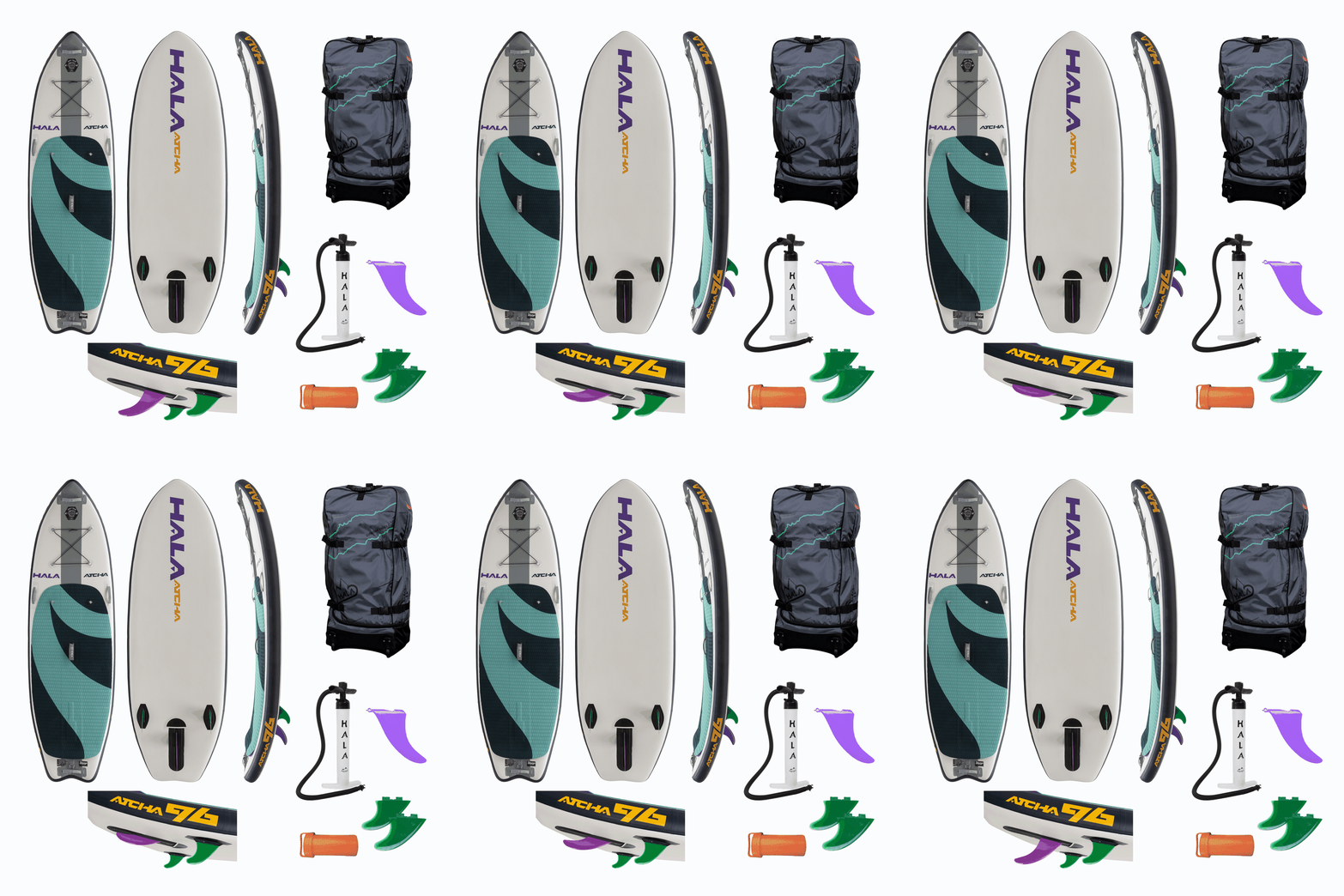






Laisser un commentaire
Ce site est protégé par hCaptcha, et la Politique de confidentialité et les Conditions de service de hCaptcha s’appliquent.